






Celebrating the institution that shaped generations of Filipino learners—from a small classroom in 1980 to a global education network.
Every great story begins with a dreamer.
Sometimes it’s a young person searching for a chance at a better life. Sometimes it’s a parent hoping their child grows up with opportunities they never had. And sometimes, it’s one founder—standing in a small, rented room—with a vision big enough to pull the future a little closer.
This is the story of AMA.
But more than that, it is the story of every student who ever walked through its halls believing, “Kaya ko pala.”
Where the Dream Started (1978–1980)
In 1978, computers were mysterious machines—expensive, rare, and almost intimidating. Yet AMA dared to bring them to the Philippines, becoming the first Computerland franchise in Asia. This bold step wasn’t about business. It was a quiet act of belief: that Filipinos deserved access to the technology shaping the world.
Just a year later, Computerland was pioneering microcomputer sales—planting seeds for a country that would someday become an IT hub.
And by 1980, in a modest space on the second floor of a rented building, 13 students showed up for the very first day of AMA Institute of Computer Studies. Their classroom wasn’t just a room—it was a promise. A door opening to futures they had never imagined.
Building a Family, One Campus at a Time (1981–1990)
As AMA grew, it didn’t expand like a corporation. It expanded like a family learning to make space for every new child with a dream.
Cubao. Makati. Quezon City. Cebu. Davao.
Every new campus was a story waiting to unfold: students carrying secondhand bags, mothers waiting outside classrooms, young men and women discovering a talent they never knew they had.
In 1987, AMA did something unheard of: it linked all its campuses through a nationwide computer network. At a time when most homes didn’t even have internet, AMA was already stitching together a digital community—proving once again that innovation wasn’t a luxury; it was an act of service.
Going Global, Staying Filipino (1991–2000)
By the 1990s, AMA began reaching places many Filipinos only dreamed of visiting.
Guam, Hong Kong, Bangladesh, California.
But AMA didn’t expand to boast international branches. It expanded to reach Filipino communities abroad—parents working overseas, children growing up in unfamiliar cities, families searching for connection in foreign places. AMA became a bridge between who they were and who they aspired to be.
At the same time, AMA was forming partnerships with global giants like Lucent Technologies, Microsoft, NCC-UK, Cisco, Hewlett Packard—showing the world that Filipino talent belonged on the global stage.
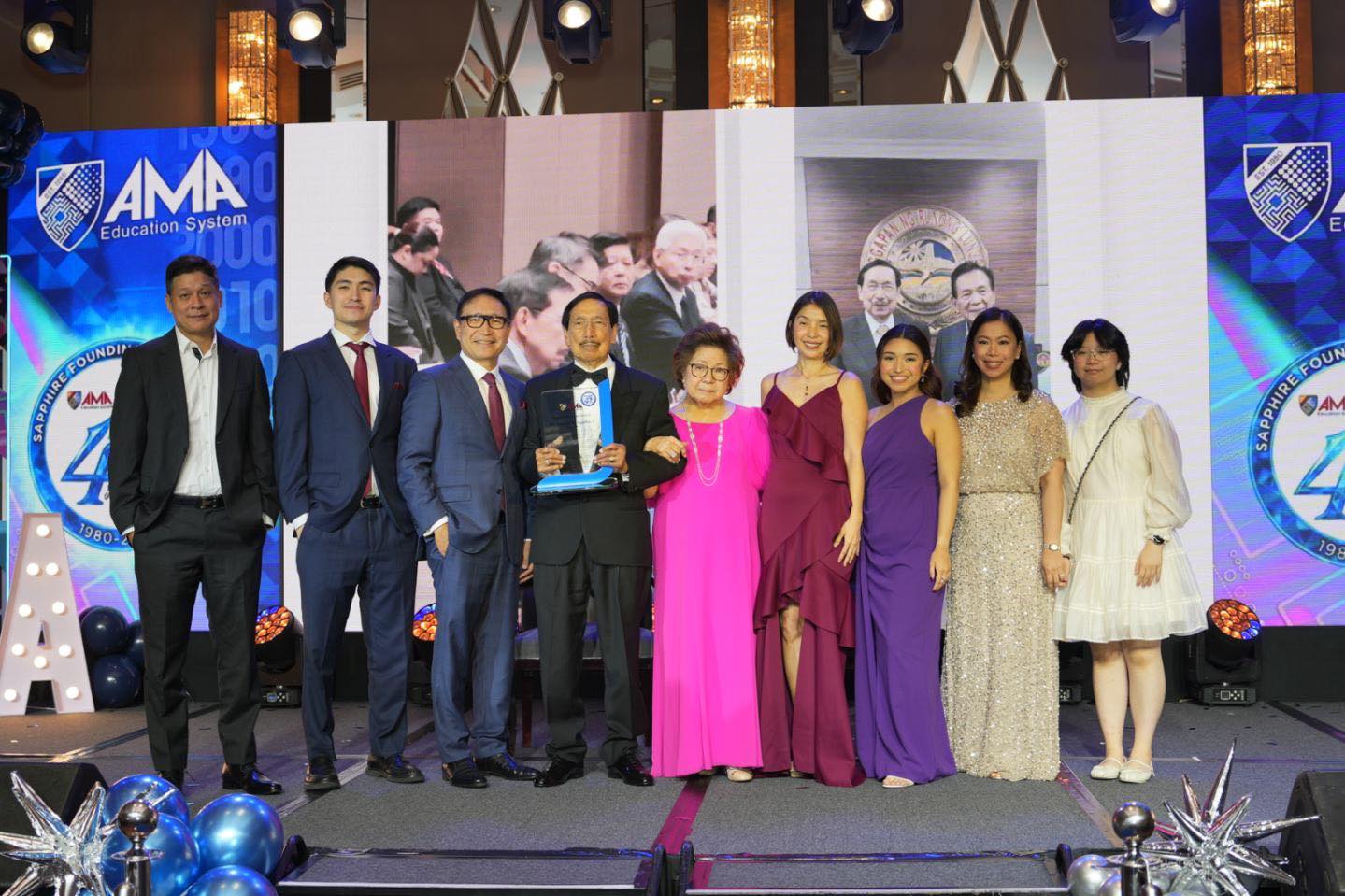
And while the world prepared for the Y2K scare, AMA’s founder, Dr. Amable R. Aguiluz V, was appointed to lead not just the Philippines’ preparations, but to sit among world leaders planning for the digital shift of the century.
From a small room in Manila to the halls of the United Nations—the dream had grown wings.
A University With a Heart (2000–2010)
The new millennium marked a turning point.
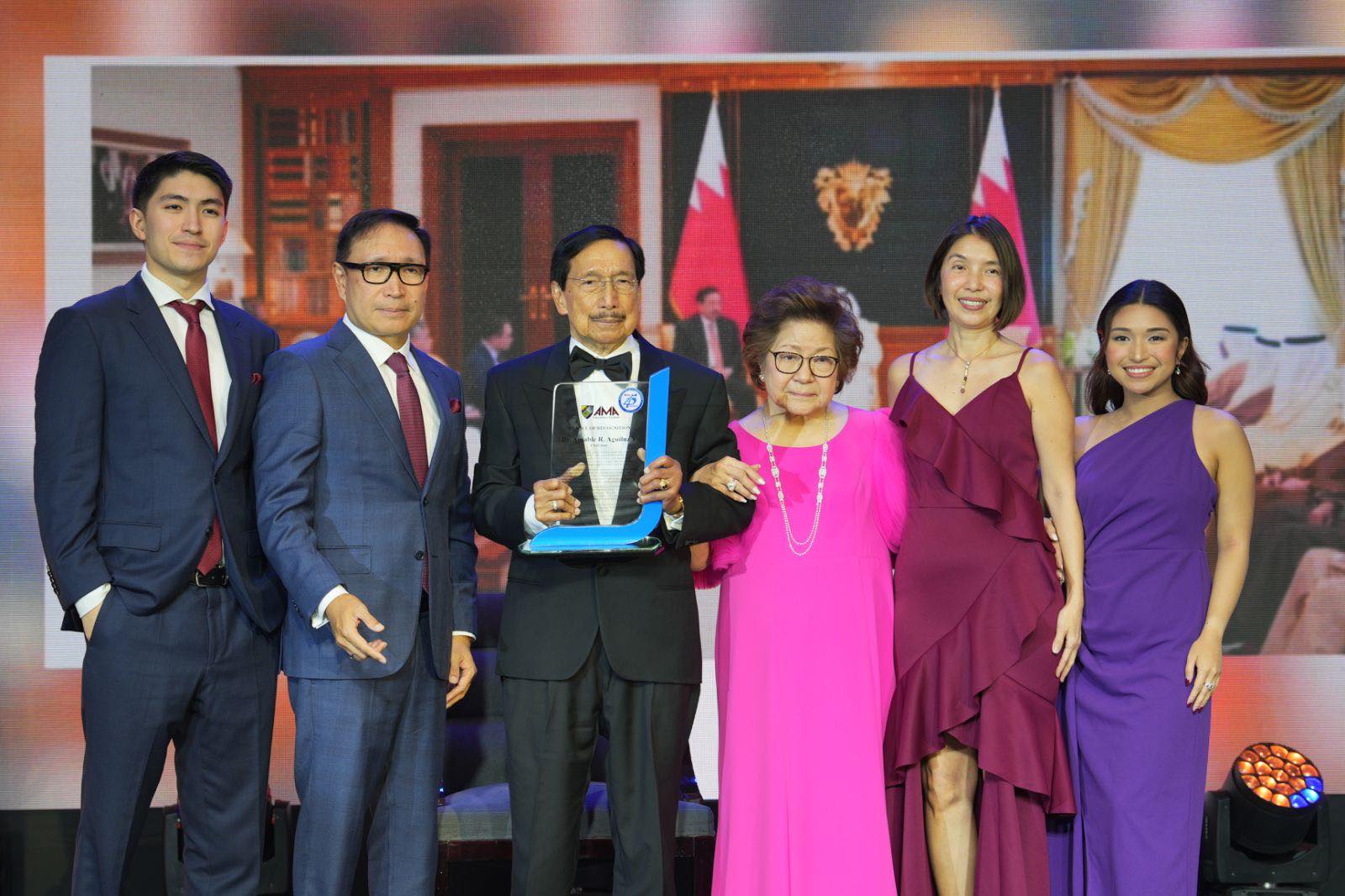
In 2002, AMA officially became AMA University—a recognition not just of academic excellence, but of its impact on Filipino lives.
Makati’s new AMA One building rose like a symbol of hope. The School of Medicine opened in both Makati and Cavite, giving birth to doctors who would someday serve communities, far-flung towns, even pandemic frontlines.
AMA also pioneered blended learning years before the country knew it would one day need such innovation for survival. Through satellite-powered classes, students in remote islands were learning the same lessons as students in major cities. For many, it was their first real shot at finishing college.

A Home for Every Dreamer (2010–2020)
The next decade was filled with stories of young people defying odds.
Students from Bahrain bringing home robotics awards.
Learners from Jakarta, Macau, and Oman finding a Filipino-style warmth on their campuses.
OFW families reunited through AMA’s international institutes.
And thousands of Filipinos—many already working—earning degrees through AMA Online Education, the first fully online degree program in the country.
It was no longer just about diplomas.
It was about dignity.
About second chances.
About proving that education can meet people where they are—not the other way around.
Dreams That Evolve With the Times (2020–2025)
As the world changed rapidly, AMA refused to be left behind.
New programs in Cybersecurity, Data Science, Blockchain, and Artificial Intelligence opened doors for Filipino youth to compete globally.
Partnerships with CompTIA and PeopleCert ensured students graduated with credentials recognized around the world.
The vision expanded beyond classrooms:
- Real estate developments valued at over PHP20 billion
- A hospital rising in ARA Vista Village
- A rural bank that became the largest used-car loan bank in the country
- A banana farm exporting to Asia and the Middle East
- Water utilities, telecommunication franchises, power distribution companies
- And a foundation offering scholarships and medical missions to those who needed help the most
AMA was no longer just an educational institution.
It had become an ecosystem—supporting families, communities, and industries.
In 2025, AMA earned ISO Certification and introduced U-Learn 24/7, a platform envisioned as the “Uber of Philippine Education,” making learning available anywhere, anytime.
The dream had come full circle: education for all, without limits.
The Story That Still Continues
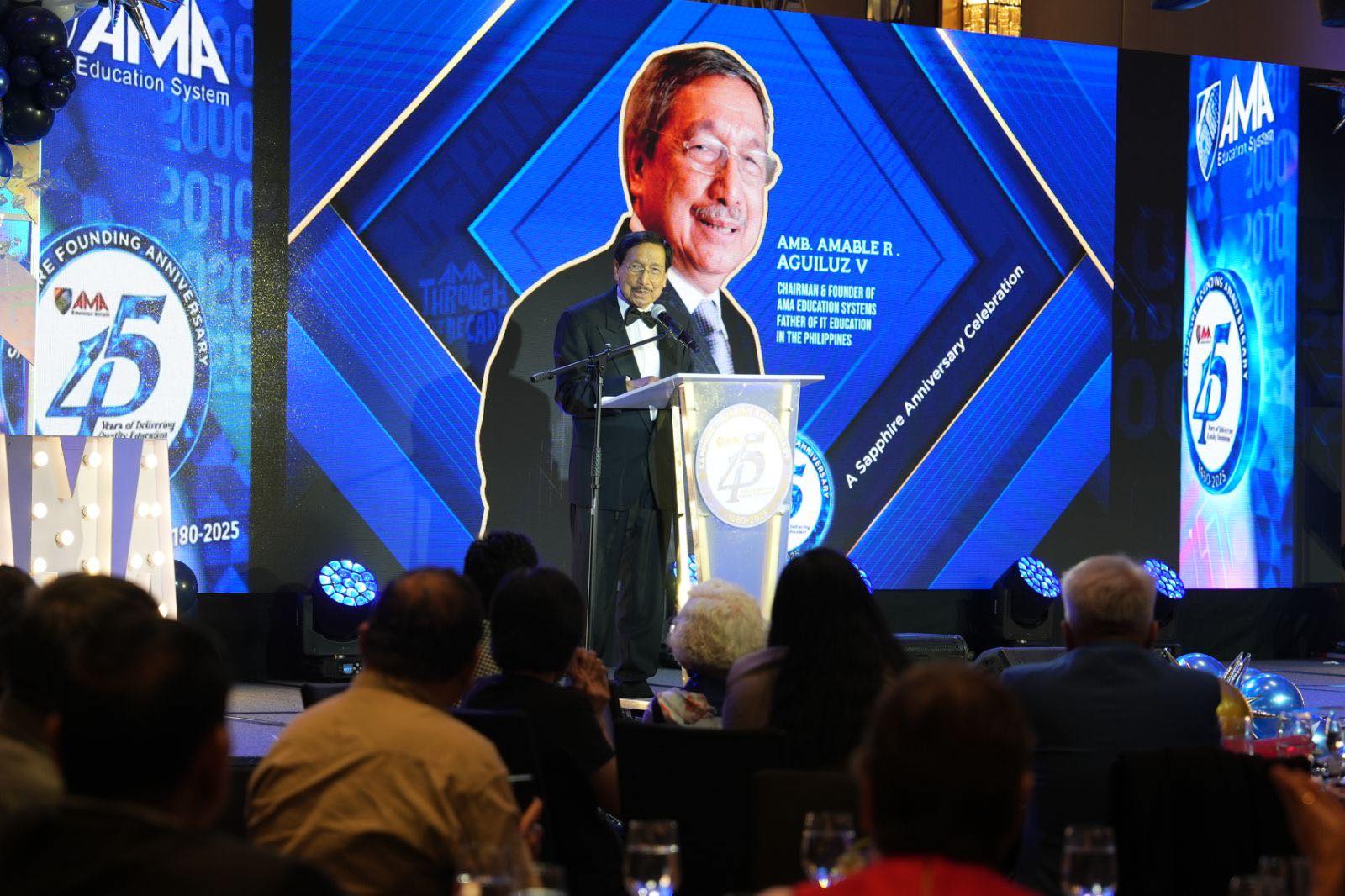
Forty-five years after that first small classroom opened its doors, AMA stands not just as an institution, but as a living testament to what happens when a dream refuses to stay small.
When you walk through any AMA campus today—whether in Quezon City, Dubai, Hong Kong, Laguna, or online from the quiet corner of a home—you will feel the same pulse that began in 1980: the belief that every Filipino deserves a fighting chance.
Because the truth is this:
AMA did not grow because it had the best computers.
It grew because it never stopped believing in the people who sat in front of them.
For every scholar who once thought education was out of reach…
For every working student who attended class after a long shift…
For every OFW parent who dreamed of a better future for their children…
For every young dreamer who arrived unsure, uncertain, or unseen…
AMA became the place where they were told, “Kaya mo ‘yan. Tuloy lang.”
And they did.
They graduated.
They built careers.
They lifted their families.
They broke cycles.
They created new legacies of their own.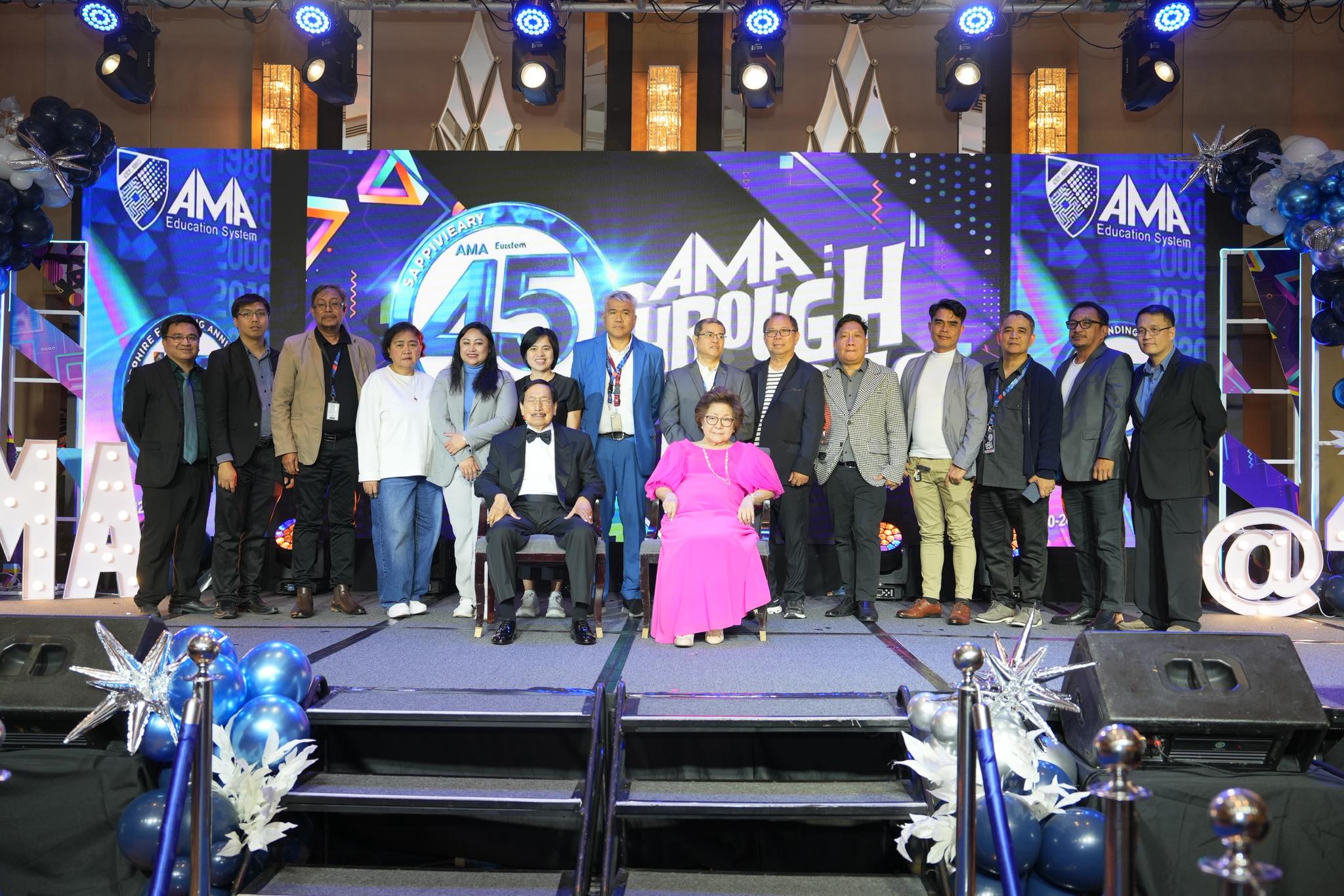
A Legacy That Belongs to the Filipino
AMA’s 45-year story is not defined by the rise of buildings, the expansion of campuses, the international branches, or the technological firsts—though those milestones matter.
The real milestone is this:
Millions of dreams, once fragile and flickering, now stand tall because AMA believed in them first.
From the students who became engineers, nurses, entrepreneurs, soldiers, and IT leaders…
To the parents who finally watched their children cross a graduation stage…
To the communities touched by the foundation’s missions and the jobs created across industries…
AMA’s greatest achievement has always been its people.
And Now, the Next Chapter Begins
As AMA steps into its 45th year, it does so with the same courage that shaped its beginning—fearless, forward-looking, and rooted in purpose.
Artificial Intelligence, Cybersecurity, Global Education, U-Learn 24/7—these are not just programs.
They are bridges leading the next generation into a world that keeps changing faster than ever.
And at the center of it all is a promise that has never wavered:
Wherever there is a Filipino with a dream, AMA will always make room.
A seat in the classroom.
A path to a degree.
A doorway to a future that once felt impossible.
Because dreams deserve more than inspiration—they deserve a home.
And for 45 years, that home has been AMA.
And the story is far from over.
In fact… the next great chapter is about to begin.